 Written by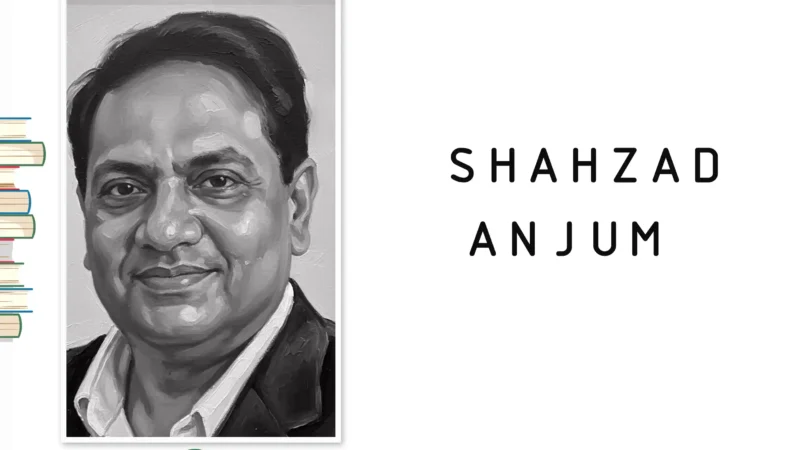
Prof. Shahzad Anjum stands as a towering figure in the realm of Urdu language and literary scholarship, whose life’s journey traces a vibrant arc from the historical city of Gaya, Bihar to his illustrious tenure in New Delhi’s academic circles. Born on April 6, 1967, Prof. Anjum’s academic odyssey began with a deep immersion into Urdu literature, culminating with a doctorate from the University of Delhi in 1999, following his M.Phil and M.A degrees—each infusing him with insight into Urdu fiction and literary criticism.
Early Life and Educational Pillars
Emerging from a lineage that valued literary excellence, Shahzad Anjum embarked on his academic pursuits at Magadh University, Bodh Gaya, before advancing to Delhi—his journey a testament to relentless curiosity and the drive for intellectual refinement. His deep-seated interest in mass media and Urdu journalism would later intertwine seamlessly with his passion for fiction and criticism, laying the foundation for a versatile career in teaching and research.
Academic Leadership and Institutional Service
With over three decades in academia, Prof. Anjum has served as the senior-most professor at Jamia Millia Islamia’s Urdu Department, New Delhi—previously helming the department and steering its research excellence. Honorary Director of the Academy for Professional Development of Urdu Medium Teachers (APDUMT), and Managing Director of Maktaba Jamia Ltd., Prof. Anjum has shaped generations of learners and educators. He has managed key national schemes such as the UGC-DRS-SAP (Phase-III) and coordinated the prestigious Tagore Research Translation Scheme, a landmark project fostering intercultural literary dialogue.
His editorial expertise breathes life into scholarly publishing, such as the annual research journal ARMUGHAN, and monthly literary magazines Kitab Numa and Tadrees Nama, each a beacon of Urdu criticism and creative prowess.
Literary Works and Creative Vision
Prof. Anjum’s literary legacy spans critical works, essays, translations, and editorial projects, many of which are regarded as pillars of contemporary Urdu discourse. His books—ranging from “Urdu ke Ghair Muslim Shuara-o-Udaba,” chronicles of non-Muslim poets, to monographs on Sir Syed Ahmad Khan, Gopi Chand Narang, and Mirza Ghalib—display his ability to interweave historical context, literary analysis, and cultural vision. As editor of Kainaat-e-Sukhan, Kuliyat-e-Azhar Inayati, and many other volumes, he has contributed some of the most significant compilations and critical studies in the genre.
His weekly columns—such as “Paasbaan Mil Gaye Kabe Ko Sanam-Khane se” and “Sareer-e-Khama” in Inquilab Urdu Daily—have illuminated the contributions of non-Muslim writers to Urdu literature, invoking wide readership and critical acclaim.
Scholarly Impact and Conferences
With more than a hundred international and national seminars, lectures, and workshops under his belt, Prof. Anjum has articulated new paradigms in Urdu fiction, literary criticism, and pedagogical innovation. His keynote addresses and special lectures have advanced discourse on topics ranging from post-independence Urdu poetry to the interdisciplinary study of cultural heritage and language education. He is equally celebrated for organizing landmark events such as Jamia Millia Islamia’s centenary literary seminars and nationwide workshops for Urdu teachers.
Mentor and Guide
A devoted research supervisor, Prof. Anjum’s mentorship has shaped several generations of scholars through guidance for Ph.D. and M.Phil theses reflecting the diversity and depth of Urdu literary thought. His students explore topics from women’s poetry in India to critical studies of Urdu drama, fiction, satire, and journalism—each testament to his nurturing role as a teacher and guide.
Honors, Memberships, and Social Contributions
Prof. Anjum’s impact reverberates through the many organizations and advisory boards he has served, including the Sahitya Akademi, Jawaharlal Nehru University, Rampur Raza Library, and Urdu academies across India. The John Gilchrist Award from West Bengal Urdu Academy (2019) for his edited work on Sir Syed Ahmad Khan exemplifies the recognition of his scholarly achievements. He has been a convener, member, and chair for committees, panels, and prize juries, and a founder member of cultural foundations—fusing academia with broader social engagement.
The Living Legacy
Now settled in New Delhi, Prof. Shahzad Anjum’s work continues to define and enrich the Urdu literary landscape. His career, marked by creative versatility, critical boldness, and institutional stewardship, inspires the next wave of writers, critics, and scholars. Steered by a philosophy of inclusiveness and rigorous scholarship, his contributions remain invaluable to the pursuit of Urdu literature’s living heritage.
In the narrative of modern Urdu scholarship, few have shaped and chronicled the journey of its language, literature, and people with as much dedication and brilliance as Prof. Shahzad Anjum.
Major Publications
- Kainat-e-Sukhan, Kuliyat-e-Azhar Inayati (Editor) — Educational Publishing House, Delhi, 2024
- Aarzoo-e-Najaat (Collection of Hamd, Naat Manqabat of Azhar Inayati, Editor) — Educational Publishing House, Delhi, 2023
- Urdu Aur Hindustan Ki Mushtarka Tahzeebi Virasat (Editor) — Educational Publishing House, Delhi, 2022
- Urdu Ke Ghair Muslim Shuara-o-Udaba (Literary Columns) — Educational Publishing House, Delhi, 2021
- Mirza Asadullah Khan Ghalib (Monograph) — West Bengal Urdu Academy, Kolkata, 2020
- Ahd Saaz Shakhsiyat Sir Syed Ahmad Khan (Editor) — Educational Publishing House, Delhi, 2019
- Tagore Ki Baazyaft (Editor) — Educational Publishing House, Delhi, 2015
- Syed Mohd. Hasnain (Monograph) — Sahitya Akademi, New Delhi, 2014
- Deewan-e-Shaida (Editor) — Maktaba Jamia Ltd., New Delhi, 2014
- Rabindranath Tagore Fikr-o-Fun Ke Hazar Rang (Editor) — Maktaba Jamia Ltd., New Delhi, 2013
- Rabindranath Tagore Shair Aur Danishwar (Editor) — Maktaba Jamia Ltd., New Delhi, 2013
- Rabindranath Tagore Fikr-o-Fun (Editor) — Maktaba Jamia Ltd., New Delhi, 2012
- Tanqeedi Jehat (Criticism) — Educational Publishing House, Delhi, 2011
- Maasir Afsana Aur Zauqui (Criticism) — Educational Publishing House, Delhi, 2010
- Khwaja Altaf Husain Hali (Monograph) — Delhi Urdu Academy, Delhi, 2008
- Syed Ehtesham Hussain (Monograph) — Sahitya Akademi, New Delhi, 2008
- Opendera Nath Ashk (Translation) — Sahitya Akademi, New Delhi, 2006
- Maulana Mohammad Ali Jauhar (Monograph) — Sahitya Akademi, New Delhi, 2005
- Azhar Inayati Ek Sukhanwar (Editor) — Educational Publishing House, Delhi, 2004
- Deedawar Naqqad Gopi Chand Narang (Editor) — Educational Publishing House, Delhi, 2003
- Mukti Bodh (Translation) — Sahitya Akademi, New Delhi, 2003
- Azadi Ke Baad Urdu Shairi (Editor) — Sahitya Akademi, New Delhi, 2002
- Swarajwad (Translation) — National Book Trust, New Delhi, 2001
- Ehtesham Hussain Ki Takhleeqi Nigarshat Ek Mutala (Criticism) — Meyar Publishing House, Delhi, 2000
Prof. Anjum has also published more than 200 research articles, reviews, literary columns in national and international magazines, journals, and newspapers. He has written extensively on Urdu literary criticism, fiction, and journalism.
Awards and Recognitions
- John Gilchrist Award (2019) by West Bengal Urdu Academy, Government of West Bengal for the edited book Ahd Saaz Shakhsiyat Sir Syed Ahmad Khan.
Additional Roles and Contributions
- Editor of ARMUGHAN, Department Annual Research Journal, Jamia Millia Islamia.
- Chief Editor of monthly magazines Kitab Numa and Tadrees Nama.
- Coordinator of UGC-DRS-SAP Phase-III and Tagore Research Translation Scheme funded by Ministry of Culture, Govt. of India.
- Active participant and keynote speaker in over 100 national and international seminars and workshops.
Last modified: November 24, 2025
